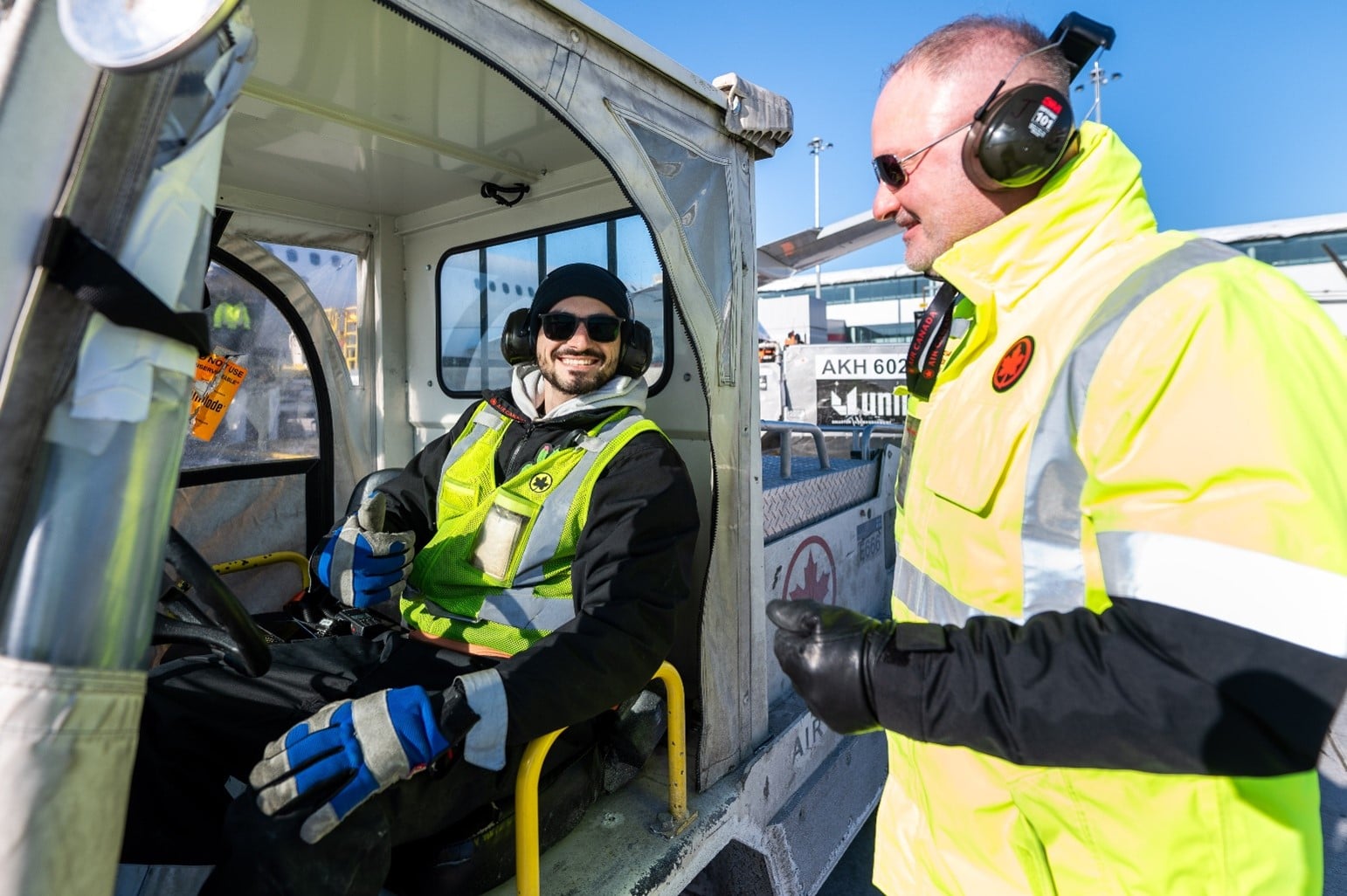
Safety Leadership Charter, Guiding Principle #2: "Foster safety awareness among employees, the leadership team, and the board”.
Safety Leadership Charter Guiding Principle #4: "Create the internal capacity to proactively manage safety and collectively achieve organizational safety goals".
Safety Leadership Charter Guiding Principle #5: "Creating an atmosphere of trust, where all employees feel responsible for safety and are encouraged and expected to report safety-related information".
Safety Leadership Charter, Guiding Principle #7: “Create an environment where all employees feel responsibility for safety”.
Air Canada’s airside environment is fast‑paced, highly coordinated, and constantly evolving. To reinforce essential safety concepts and actions, Air Canada researched, designed, and implemented a Safety Ambassador program, grounded in the principles of “just culture” and built around the needs of front-line employees.
Safety Ambassadors are embedded into Air Canada’s airside operations 24/7 in Toronto (YYZ) and Montréal (YUL). With more than 130 years of collective experience in the industry, the team leads with expertise and sincerity – and their role balances oversight and a compliance-driven approach with coaching, recognition, and open communication.
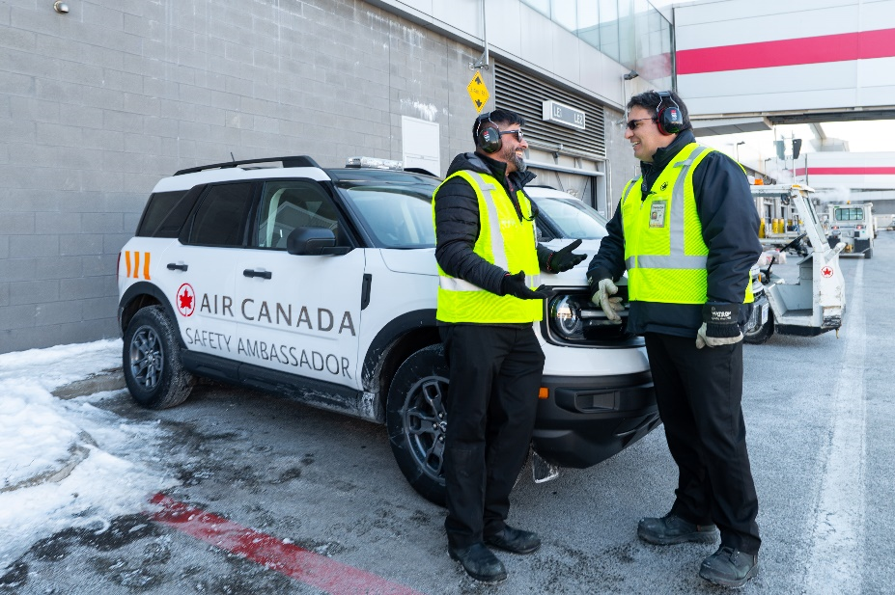
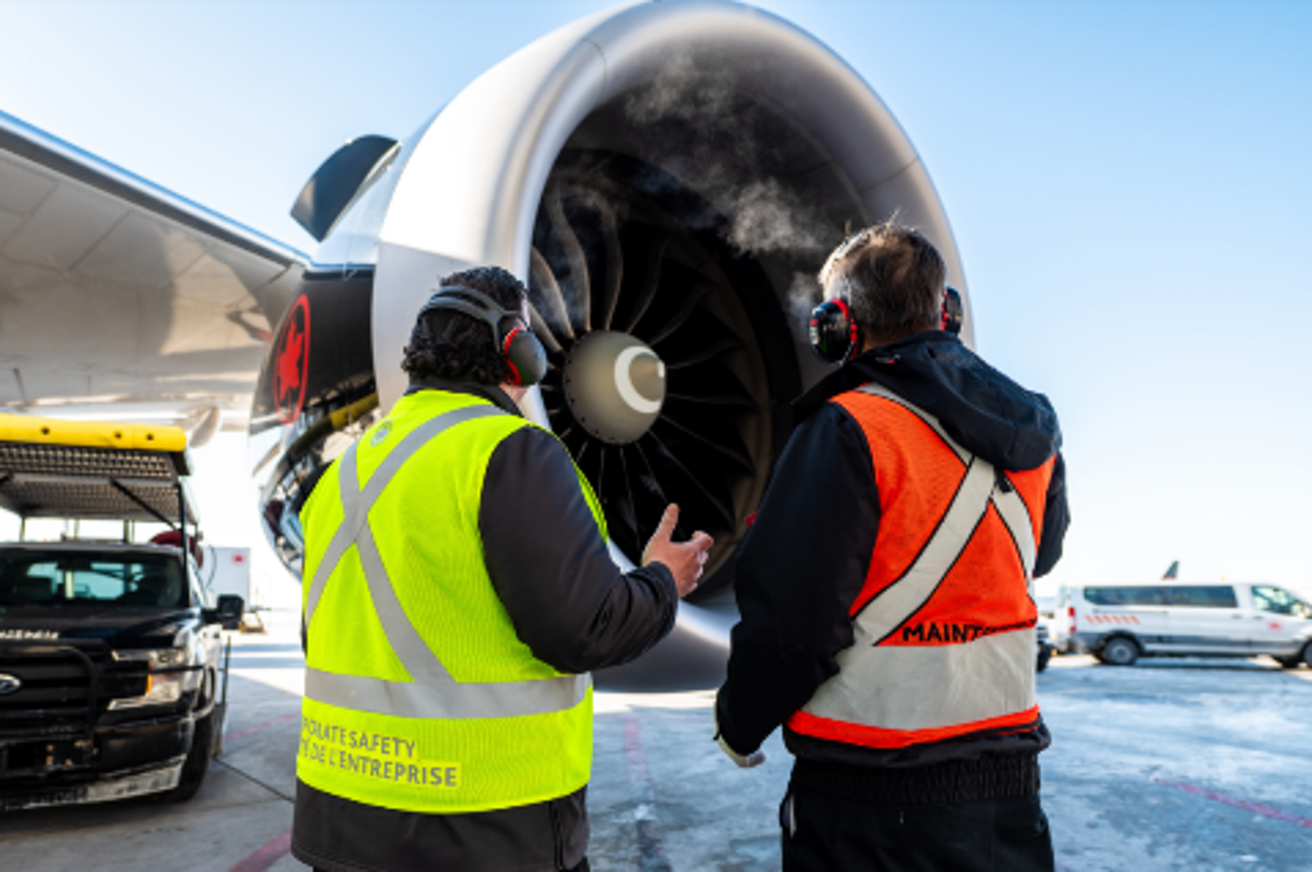
Safety Ambassadors work separately from operational reporting lines and engage employees through a peer-to-peer, collaborative style, with many coming from airside or training backgrounds. Their presence builds confidence and encourages reporting.
Safety Ambassador responsibilities include:
Their greatest influence comes from interactions and coaching, during which Safety Ambassadors work directly with employees to:
“The biggest difference in promoting a non-punitive safety culture with Safety Ambassadors is that it creates an environment of trust and transparency,” says Gregory, a Lead Station Attendant at Air Canada.
“The ability to report safety concerns or close calls without fear of reprimand is the most important aspect of keeping employees and passengers safe.”
To date, Safety Ambassadors have aligned with IOSA methodology to complete nearly 90,000 daily observations and track almost 20,000 proactive conversations around “just culture” and airside safety. Notable improvements have been observed in several critical metrics, including:
Importantly, the recognition aspect of the Safety Ambassador program has also resulted in 600 total commendations in Canada and contributed to 25 front-line employees receiving a Safety Champion Award.
“Employees see me coming and the engines are cut, the side rails go up, but not because they’re afraid of being caught. They know what to do and how to do it safely, and we’re getting to a place where habits are improving for the better,” says Rubel Singh, one of Air Canada’s Safety Ambassadors.
Main Challenges
Lessons Learned
“A big part of our strategy includes positive relationships and outcomes by involving our employees, rewarding safe behaviour, and holding everyone responsible for safety,” explains Elmer Acebedo, Manager, Safety Culture and Data Insights at Air Canada.
“The fact that our operation is seeing the Safety Ambassadors day in and day out, and that these relationships are being built, is making a measurable difference.”