Safety Leadership Charter Guiding Principle #3: “Guide the integration of safety into business strategies, processes, and performance measures.
Safety Leadership Charter Guiding Principle #4: “Create the internal capacity to proactively manage safety and collectively achieve organizational safety goals.”
Background
Juneyao Airlines adheres to the safety philosophy of "reverence for life" and "prevention first". To enhance our existing Safety Management System (SMS), we identified the need to upgrade from "post-event response" to a strategic capability of "active prevention + predictive improvement". The goal was to develop a specialized module that ensures safety becomes a core competitiveness that can be explicitly measured, predicted, and managed.
Brief description of the initiative
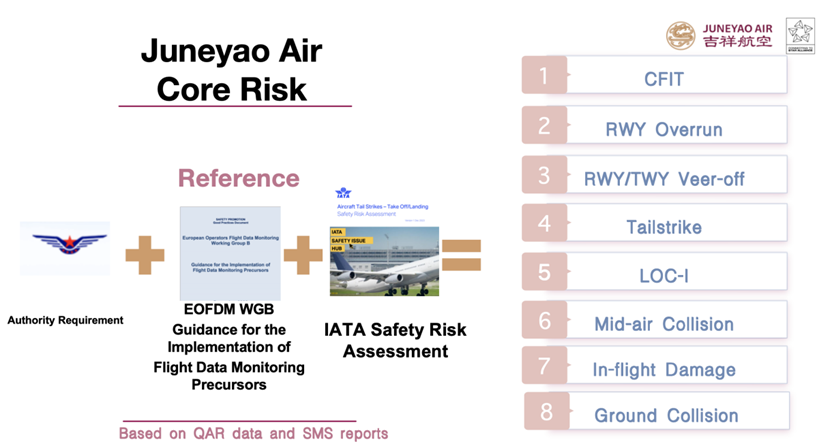
Juneyao Airlines developed an integrated Core Risk Management Module within its SMS, empowered by technology and alignment with global standards. This module functions through three key components:
- All-Dimensional Risk Monitoring: The module integrates EOFDM working group documents and IATA risk definitions to expand monitoring to eight core risks, such as Controlled Flight Into Terrain (CFIT), runway overrun, and loss of control. It utilizes over 100 refined monitoring items to fully cover regulatory key indicators.
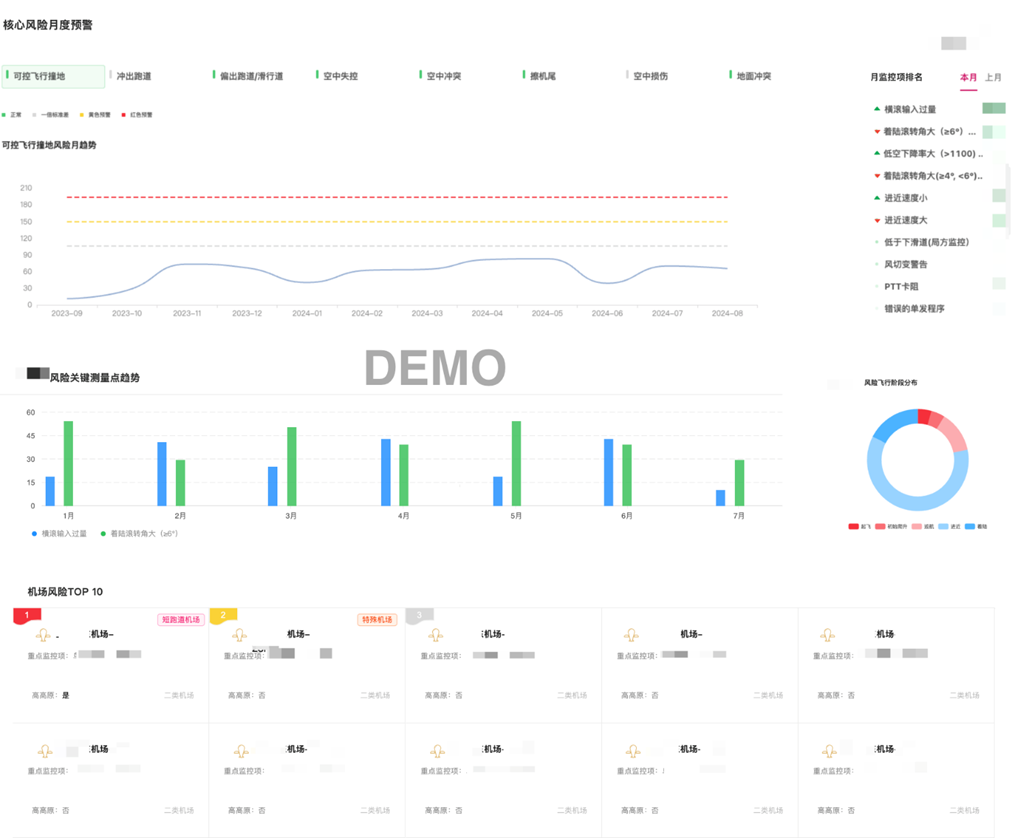
- AI-Enabled Dynamic Warning: By integrating over 10 types of data sources (including QAR, ASR, and LOSA), the module applies AI algorithms—such as CUSUM cumulative sum charts and Shewhart control charts—to capture minor risk trends. This enables real-time risk information, like approach energy management prompts, to be pushed directly to the cockpit via EFB intelligent terminals.
- Three-Level Management Closed Loop: The module implements a full-chain "L1-L2-L3" mechanism within the SMS. It connects core risks (L1) to monitorable states (L2) and root causes (L3) using the SHELL-M model, facilitating cross-departmental collaborative disposal.
What positive changes did this initiative help bring?
Measurable Outcomes:
- Precision Prevention: The module allows the SMS to move from "discovering problems" to "preventing problems" by utilizing a risk value calculation model based on ICAO Doc. 9859.
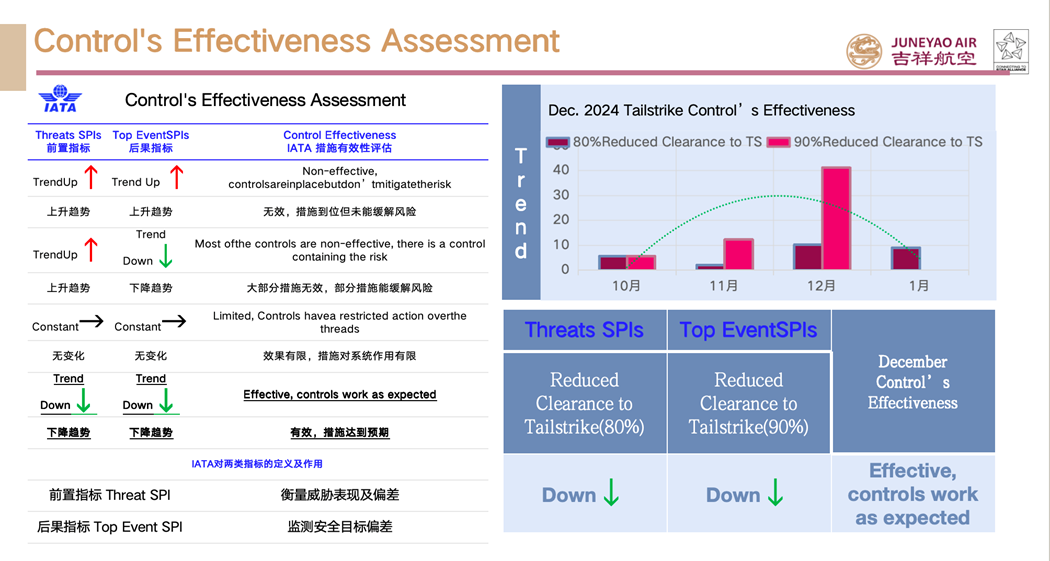
- Visualized Effectiveness: Using "Tail-strike Control" as a pilot case, the module visualized the effectiveness of controls through leading and lagging indicators, tracking reduced clearance to tail-strike (80% and 90% reductions) to confirm measures were working as expected.
- Differentiated Assessment: The introduction of multi-dimensional risk profiling allows for "one risk, one strategy," distinguishing specific risks based on airport attributes (e.g., long vs. short runways) and aircraft type characteristics.
Next Steps:
Juneyao Airlines will continue to use this module to empower safety with technology, ensuring that data-driven trust defines new safety standards for every takeoff and landing.
Main challenges and lessons-learned
Challenges in Data Integration and Verification:
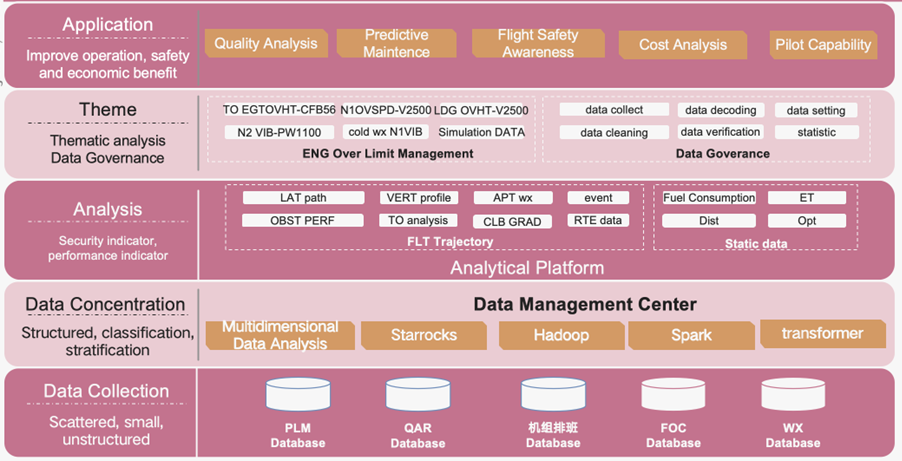
- Data Unification: A primary challenge was integrating scattered, unstructured data into a unified platform. The module required combining diverse sources (SMS reports, weather, QAR) into a centralized "ADP Data Base" to support quality analysis.
- Validating Controls: Ensuring implemented measures were truly effective was difficult. We addressed this by adopting the IATA evaluation framework, categorizing prevention measures into a four-level verification system ("effective - restricted - limited - ineffective").
Advice for other organizations
- Leverage Global Standards: Aligning with global standards (like IATA and EOFDM documents) ensures the monitoring network is robust and comparable.
- Focus on Visualization: Combining leading indicators (trend early warning) with lagging indicators (result verification) is essential to ensure that management measures within the SMS are implemented effectively.