


Improving safety in the transport of Dangerous Goods has always been an iterative process, often in response to evolving technological developments. And while movement of dangerous goods on aircraft is tightly regulated, aviation is one mode of transport, where classification and nomenclature, packaging standards, hazard communication need to be globally consistent to facilitate commerce and movement of dangerous goods.
For many years, vehicles powered by internal combustion engines have been able to transported on aircraft provided the vehicle’s fuel tanks contained no more than 25% fuel and traditionally, these vehicles were categorized under the Special Handling Code (SHC) of RMD – Restricted Miscellaneous Dangerous Goods
With the emergence of electric-powered vehicles, and an effort to reduce the risks associated with large batteries, the packing instructions resulted in a similar requirement – batteries were to be at an indicated capacity of not more than 25%.,Generally, this is a reasonable proxy for an energy level where battery cells are unlikely to enter into a sympathetic thermal runaway in adjacent cells.
The introduction of UN numbers and Proper Shipping Names for lithium ion, lithium metal and sodium ion powered vehicles (respectively UN 3551, 3552 and 3553) created uncertainty among operators as to whether these shipments should be allocated handling codes of RLI or RLM or remain under the general Class 9 descriptor of RMD.
The classification of hybrid vehicles presented an additional challenge. Classification of dangerous goods is structured at the UN level for all modes of transport. Hybrid vehicles are primarily classified under UN 3166 for flammable liquid/gas powered vehicles. There is a wide variety of hybrid concepts and how vehicles were designed to operate efficiently using on board electrical energy and storage., and mandating a particular indicated battery capacity of 25%, can only be achieved if the flammable liquid/gas fuel tank is empty.
In response to requests from air cargo operators on tools that improve visibility into hybrid vehicles and help to better understand and manage the risks; the 67th Edition of the DGRs introduced additional descriptive text to the existing flammable liquid/gas powered entries.
These were in addition to, and not replacements for, the existing bold type entries for UN 3166 vehicles.
- UN 3166 Vehicle, flammable gas powered, hybrid
- UN 3166 Vehicle, flammable liquid powered, hybrid
Shippers, forwarders and ground handling agents were encouraged to use these entries so that operators are better able to assess and manage the risks involved in transporting these hybrid powered vehicles.
In an increasingly digitally connected world, an important concept was that the nomenclature be consistent with, and not disrupt, existing data exchange mechanisms for the vehicles to be able to be transported on other modes of transport.
To support the operators, additional vehicle-related special handling codes were created to better classify the vehicles.
CargoIS data analysis has revealed a surprisingly strong take-up in the usage of these four codes with over 4000 entries in the first five months of this year.
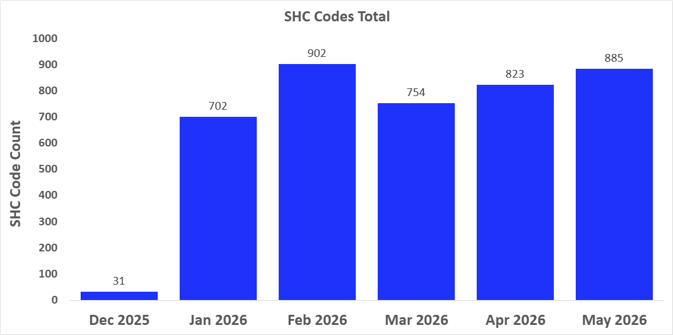
And while flammable liquid/gas-powered vehicles are still the most common form of vehicle being transported, there is now some insight into the proportion of electric and hybrid vehicles that are being carried on aircraft.
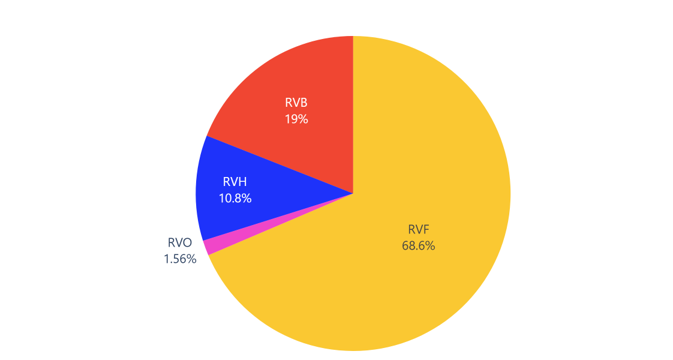
RVB — Vehicle, Battery Powered (limited to lithium ion under UN 3556, lithium metal under UN 3557 and sodium ion under UN 3558)
RVF — Vehicle, Flammable, gas or liquid powered (including fuel cells)
RVH — Vehicle, Hybrid (hybrid vehicles under UN 3166)
RVO — Vehicle Other (vehicles powered by other battery types under UN 3171)
The final snapshot in this bulletin looks at the regional usage of the code for the hybrid powered vehicles (RVH), with Europe being the predominant region of origin of these shipments.
Europe, Asia/Pacific and North America are fairly evenly distributed as a destination region.
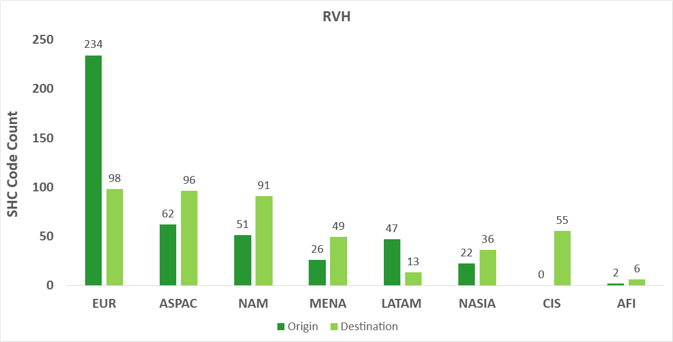
It is pleasing to note the early adoption, strong uptake and active usage of these new vehicle codes and descriptive entries for hybrid-powered vehicles.
IATA will continue to gather information and use operational experience and feedback on any measures that support safer and more efficient transport of dangerous goods. In turn, this information will also be reviewed against emerging developments in mandatory battery test standards and be used to shape future recommendations to the IATA Dangerous Goods Board, the ICAO Dangerous Goods Panel and the UN’s Subcommittee of Experts on the Transport of Dangerous Goods.