

“ The training helped me move from reacting to operational situations to proactively identifying risks. It gave me the structure to understand not just what happened, but why – and how to prevent it ."
Hasan Alitani, Aviation Security Assurance – Health, Safety & Security, Saudia Cargo
Aviation safety and security are built on precision, discipline, and continuous improvement. For professionals working in high-responsibility roles, developing the ability to anticipate risks – not just react to them – is critical.
For Hasan Alitani, now working in Aviation Security Assurance – Health, Safety & Security at Saudia Cargo, this shift has been at the core of his career evolution. After more than a decade in flight operations and operational control, he made a strategic move into aviation security, supported by targeted training to strengthen his expertise in risk management and safety oversight.
Hasan’s aviation career began in a hands-on operational environment, working in aircraft maintenance support on the ramp. Early exposure to aircraft, ground operations, and safety-critical processes shaped his understanding of aviation from the ground up.
As his career progressed into flight operations and operations control, he gained experience managing real-time challenges: coordinating crews, ensuring regulatory compliance, and supporting safe and efficient flight operations.
However, transitioning into aviation security assurance introduced a new set of challenges.
Instead of focusing on real-time operational execution, the role required a more strategic and proactive approach to safety and security: identifying risks before they materialize, ensuring compliance with international frameworks, and strengthening investigation and assurance processes.
This shift required developing new capabilities in:
While Hasan’s operational background provided valuable context, he recognized the need to complement this experience with formal methodologies and internationally recognized best practices.
To support his transition into aviation security and risk assurance, Hasan made a deliberate investment in his professional development, seeking out training that would complement his operational background with structured, globally recognized methodologies.
Driven by a strong commitment to continuous learning, he pursued specialized programs with IATA, while also following recommendations from his department to strengthen his capabilities in safety and security oversight.
He completed the following courses:
These programs provided structured frameworks that align closely with the realities of aviation operations, while introducing a more systematic approach to managing safety and security risks.
Building on his strong operational foundation, the training expanded his capabilities into a more structured, risk-based approach – enabling him to analyze risks more systematically, investigate incidents more effectively, and strengthen oversight across complex operational environments.
One of the most immediate benefits of the training was the ability to approach operational challenges through a more structured lens.
Risk assessment frameworks introduced during the training now support a more proactive evaluation of operational environments, helping identify vulnerabilities and assess how different factors influence risk levels.
At the same time, applying Root Cause Analysis (RCA) has strengthened the way incidents and operational events are reviewed. Instead of focusing only on outcomes, Hasan now looks deeper into underlying contributing factors, enabling more effective corrective and preventive actions.
The introduction of Security Management Systems (SeMS) principles has also played a key role. By promoting continuous monitoring, structured reporting, and proactive risk management, SeMS provides a framework that connects operational awareness with formal governance processes.
For professionals with a strong operational background, this combination is critical, turning experience into consistent, repeatable, and scalable safety practices.
Today, Hasan applies a more structured and forward-looking approach to aviation security assurance.
When evaluating operational situations, the focus has shifted from simply understanding what happened to analyzing why it happened – and how similar risks can be prevented in the future.
This has led to several tangible improvements:
Within the organization, these capabilities help bridge the gap between day-to-day operational realities and structured aviation safety and security management systems.
Ultimately, this contributes to a more proactive safety culture, where risks are identified earlier, managed more effectively, and continuously monitored.
Beyond technical knowledge, one of the most valuable aspects of the training experience was the opportunity to exchange perspectives with aviation professionals from around the world.
Despite operating in different regions, many organizations face similar safety and security challenges. Sharing insights and real-world experiences reinforced an important principle: aviation safety and security rely on continuous learning and industry collaboration.
For Hasan, this experience highlights the importance of combining operational experience with structured training to build a strong foundation in aviation security and risk management.
As the aviation industry continues to evolve, professionals who can bridge operational experience with structured risk management will play a critical role in ensuring safe, secure, and resilient operations.
For Hasan, this journey is ongoing. Building on the foundation established through his recent training, he has already enrolled in further programs – including IOSA Airline Auditor and Aviation Internal Auditor – to continue strengthening his expertise and expanding his contribution to aviation safety and security.
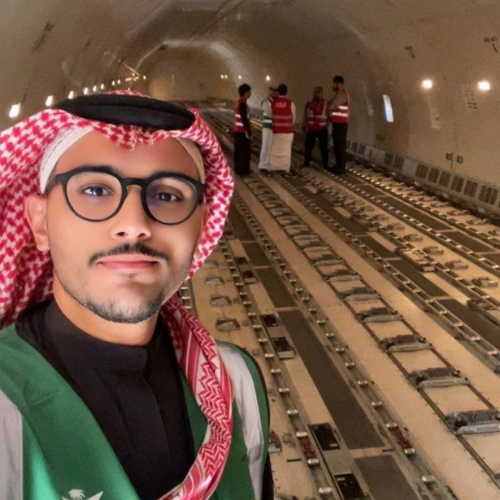
About Hasan Alitani With over 16 years in aviation, Hasan Alitani has built his career at the heart of airline operations – progressing from hands-on roles in flight operations to aviation security and safety assurance at Saudia Cargo.
His journey reflects the path many aviation professionals aspire to: combining deep operational experience with a growing focus on safety, security, and risk management. Today, he plays a key role in strengthening how aviation systems anticipate and manage risk, helping ensure that operations remain safe, compliant, and resilient. Holding both a Bachelor’s degree in Public Administration and an MBA, Hasan brings together operational expertise and strategic thinking. His work spans aviation safety and security management systems, regulatory compliance, and cross-functional collaboration across complex environments.
Driven by a passion for continuous improvement, Hasan represents a new generation of aviation professionals – those who not only keep operations running, but actively shape safer and more secure skies for the future.



 My Training Account