In the early 2000s, as IATA mandated the shift to electronic ticketing, airlines faced a defining choice. Some treated it as a compliance exercise—an IT upgrade to meet requirements. Others saw it as a business transformation that would reshape operations and unlock new commercial opportunities.
The results spoke for themselves. Airlines that treated e-ticketing as a technical project saw limited benefits. Those that reimagined their business around digital servicing unlocked far greater value: automated check-in and boarding, faster interline settlements, reduced fraud, self-service capabilities, and—with Electronic Miscellaneous Document —ancillary upselling. This mindset shift laid the foundation for innovations that reshaped air travel.
Today, airlines stand at a similar inflexion point with Modern Airline Retailing – but on a much greater scale.
Many of today’s pain points stem from legacy constraints: PNRs (Passenger Name Record) that restrict dynamic retailing and seamless servicing, manual settlement processes that limit revenue visibility, and disjointed servicing that frustrates passengers during disruption. Modern Airline Retailing can resolve these issues and enable integrated, personalized travel experiences—but only if airlines approach it as business transformation, not system replacement.
The temptation is to view Modern Airline Retailing as a technology upgrade: swapping out legacy components while keeping old processes and interfaces. That approach misses the real opportunity. Transformation must start with business outcomes—driving revenue through dynamic pricing, reducing cost through automation or accelerating time-to-market for new products. When outcomes lead, technology follows purposefully.
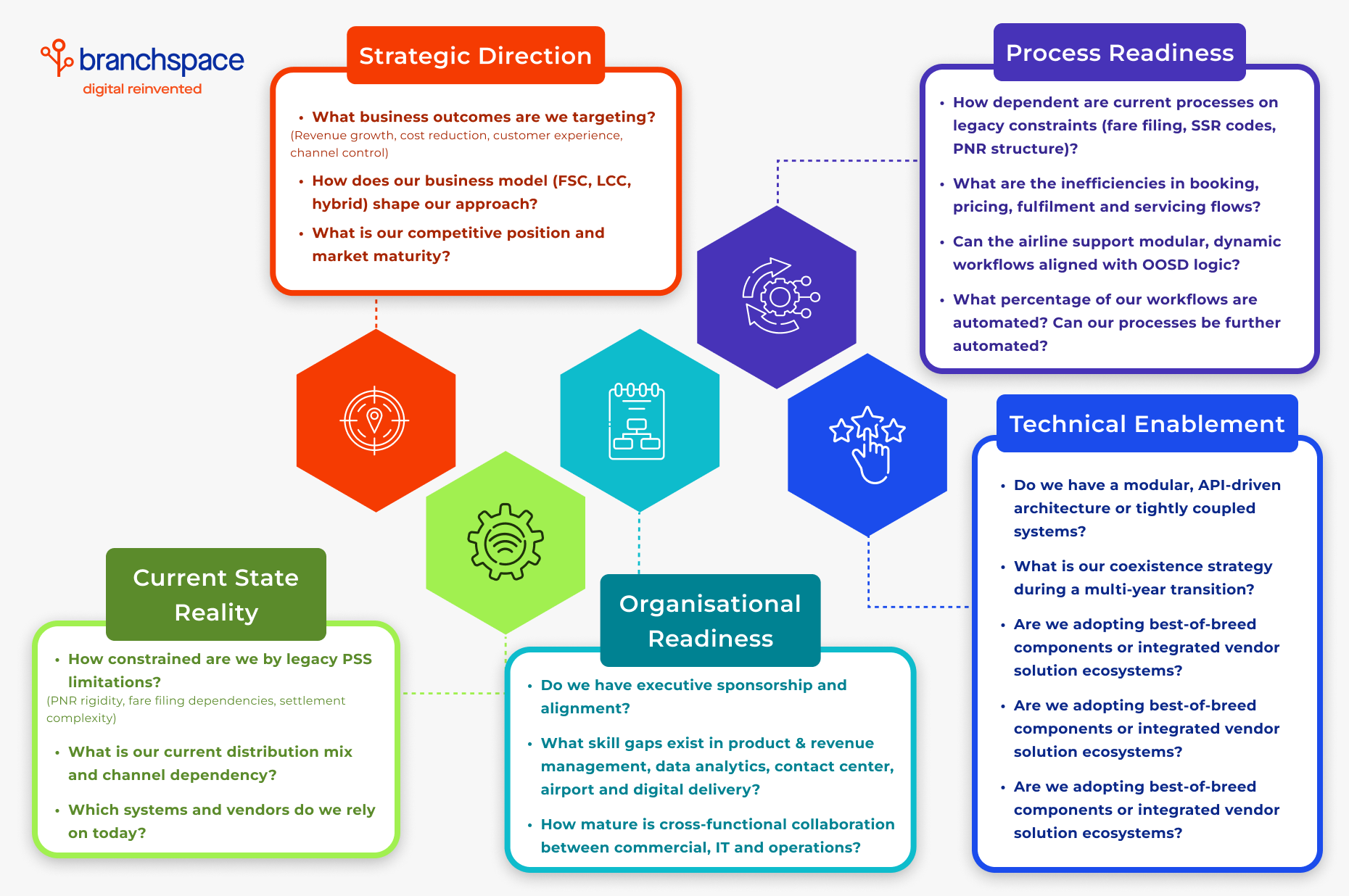
Successful airlines also recognisz that technology is only one of five interdependent pillars.
Transformation is successful when these pillars align and collectively drive measurable commercial outcomes.
Realizing return on investmentrequires pragmatic sequencing and alignment. Airlines that start with targeted propositions—such as ancillary bundles or dynamic offers—and expand in phases typically see the greatest success. Branchspace’s global experience shows that value in Modern Airline Retailing transformation comes from a focused start—such as launching ancillary bundles—followed by a phased rollout for omnichannel servicing, underpinned by organisational alignment across delivery and accounting functions
E-ticketing taught a clear lesson: transformation delivers value only when driven by business outcomes, not technical specifications. The same truth applies to Modern Airline Retailing.
The real question for airlines today is not whether to modernize—it is whether they will learn from history or repeat it. Those that choose business transformation over technical migration will not just implement new systems; they will redefine how they compete, how their people work, and how their customers experience travel.

*Find out more about Branchspace's engagement in the IATA's Strategic Partnership Program on the partners directory.