

As any marketer knows, it’s not enough to have a great product. If consumers can’t find it, or buying it is complicated, it won’t generate the revenue hoped for. When it comes to destination marketing, tourism boards are increasingly realizing that promotion is not the only lever they can use to attract visitors; distribution is also key. The easier it is to get to your destination, the more the travelers you target are likely to visit. But how exactly does one go about getting airlines to fly to a particular country or city?
In line with your strategic vision, as a destination marketing organization (DMO), you will have identified certain “source markets” to target. Your aim is to attract tourists from these places to meet your objectives of numbers of visitors, overnights and average spend, and make your organization and your minister look good. You know that potential visitors from these markets have the inclination to travel, are perhaps attracted by what your destination has to offer, and have the propensity to spend once they get here. The question is: how can they get here?
When you think of connectivity, your first thoughts no doubt go to direct connections between the source market and your own, and you might see that there aren’t many. Your reflex then will be to reach out to different airlines to improve those connections. The math for you is simple: attractiveness of your destination + growing demand from that part of the world = filled aircraft seats. And, during the period that the existence of the route becomes better known and the aircraft flies at less than full capacity, you even have budget earmarked to assist the airline with its promotion activities. How could they refuse? Especially since you have skilled negotiators on your side, used to dealing with carriers – the operator of your destination’s airport.
Unfortunately, while you share a goal with the airport authority to increase traffic to your destination, your vision is not aligned with theirs. Airports generate revenue not through numbers of people who land at and exit the airport, but through numbers of aircraft that use their services, whether passenger or cargo, and through people that spend time in the airport – including those connecting onward. If an airline declines to open this new route, but increases frequency on an existing route, the airport authority will still meet its objectives.
And so will the airline, because it makes decisions based on profitability, risk and network strategy. Increasing frequency on this existing route will make sense because the carrier knows it is over capacity on certain days, that there is resistance by passengers to move to other days, and that it can charge more on those in-demand days. By adding another flight a couple of times a week, it can maximize revenue for reduced investment cost and a lower risk than adding an entirely new untried and untested route.
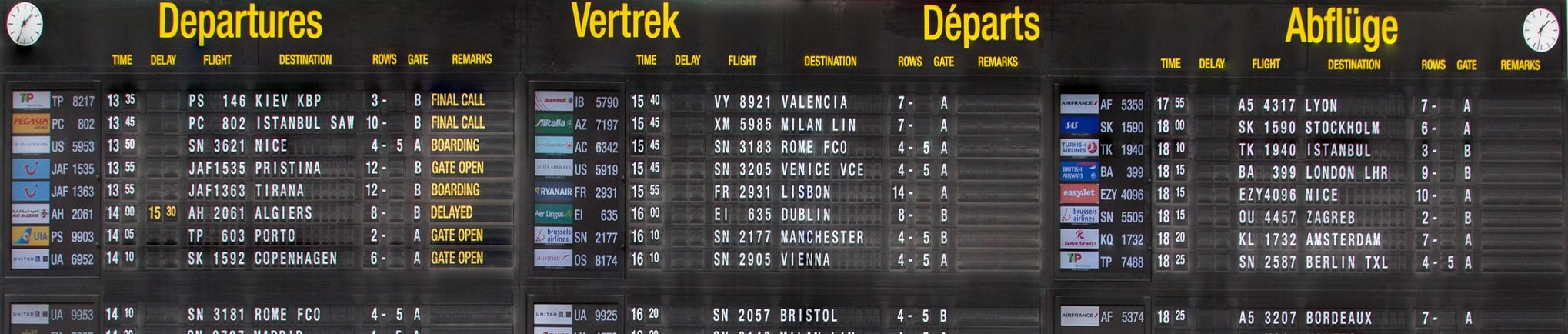
By thinking more like an airline, you can make a more compelling business case for greater connectivity to your destination. Starting with the high-spending or source market you have identified, you can look at where people from that country are currently able to fly from and to. Some of the end-points on flights will not be final destinations but transit points, and perhaps there are already connections from those hubs to your destination. As in the above example, there may be a case for increasing frequency on an existing route through a hub.
Increased frequency to Portugal - a case in point
The strategic focus of Visit Portugal (the national tourist office of Portugal), in 2024, was to gain more tourists from China and India. Dubai is a major hub connecting these key emerging markets, and there was already a daily flight on the Dubai (DXB) to Lisbon (LIS) route, served by Emirates. Instead of trying to negotiate a direct service, Visit Portugal chose to work with Emirates to promote Portugal as a destination in China and India. With the subsequent increase in tourists, the carrier was able to add a second daily service on DXB - LIS, effectively doubling travel capacity for visitors from that part of the world.
It may also be that the geopolitical climate or world events temporarily disrupt connectivity to your destination and make it difficult or impossible for visitors to get to you. But there may be other hubs that currently or could potentially serve your destination and your target markets. For example, in early 2026, Thailand was facing challenges in connectivity due to unrest in the Middle East, providing an opportunity for Norwegian airline Norse Atlantic Airways to increase capacity on its London Gatwick to Bangkok direct route.
You can enhance that initial passenger flow information with data on the geographical origin of your current visitors. What routes do they take to get here, through what connections? Comparing the numbers that come from different origin airports can give you a good idea of overall demand. But it is also important to consider where those visitors actually live, not just the origin airport. For example, London Heathrow airport serves the entirety of the British Isles, from the north of Scotland to the west of Ireland, and travelers get there via train, plane and automobile. When you know their hometown, you can assess what alternatives they might take.
Assessing alternative routes - an example
We might see that 50,000 tickets for the London to New York (LHR-JFK) route were sold in Newcastle, which is 456 km from London. We see also that there is no direct flight to JFK from NCL airport, but there is a choice of hubs enabling one-stop flights, including via Frankfurt and Amsterdam. Additionally we see that there is a flight through Dublin or direct from Edinburgh, only 194 km away.
Finally, you can look at your competition, benchmarking numbers of visitors from your target markets to destinations similar to yours. If Colombia was trying to attract an airline from Europe, it could compare passenger flows from the EU to Colombia, to flows from the EU to Mexico, Brazil and other South American destinations, for example. This comparison will give you a better feel for how valuable your destination can be to an airline.
To put some numbers on these different cases, you will need access to ticket information, and that is where your air operator can be of most help in building your understanding of the connectivity landscape. The data product they use may be able to provide such information as passenger traffic flows over time, itineraries, current and planned schedules, capacity and yield (average revenue per passenger per kilometre), airlines used, ticket class, average fares, even where passengers bought their tickets. All of this information is available in IATA’s AirportIS product, and IATA’s Global Agency Pro (GAP) tailors it to your destination.
Step 1: Understand the airline's decision framework
As we saw, airlines make decisions based on profitability, risk, and network strategy. While an airline will never expect you to prove the profitability, you can analyze fares and yield to give indicators of revenue potential, such as a high percentage of premium (business class/premium leisure) compared to economy. IATA data products also provide a detailed breakdown of costs, historical data for load factors (the percentage of available seat capacity filled by paying passengers), and at what point the airline breaks even.
Step 2: Build data-backed route opportunities
By showing how many passengers could fly on a particular route, and then giving fare and passenger yield indications, you can highlight the revenue opportunity. If the new route now provides direct rather than one-stop access, you can indicate the impact of passengers that switch.
Historical data, looking at previous route launches, can be used to show how well your market responded to new services, in two ways. Firstly, you can show how much additional demand was stimulated; for example, when XYZ Airways launched their new route here, demand was tripled, while in competing destination markets airlines typically only double demand. Secondly, by looking at the hometown of those visitors, you can show how a wider service area beyond the immediate origin airport was stimulated.
Step 3: Align opportunities with destination strategy
While more than a simple pitch for your destination, your business case is not just about the airline either. It must show which routes are priority for you and why, and how you see the airline working with you on this vision. Your strategic findings and actions on priority markets, seasonality, and products such as luxury, leisure or MICE, can be showcased to reinforce the thoroughness of your approach.
Step 4: Identify potential airline partners
The airlines you approach should correspond to your destination’s strategy. Attracting visitors from afar, or who are looking for a luxury experience, means partnering with a full-service carrier that operates a wide network, long-haul routes and the full range of fare classes. Low-cost carriers will be good partners for stimulating the volume of visitors, and charter or leisure operators will be ideal for seasonal demand.
Step 5: Design a smart incentive and co-marketing strategy
There are generally three types of incentives that DMOs consider to support airlines in getting to profitability more quickly: fee reductions, risk-sharing and marketing support. Reducing airport fees however, like delegating negotiation with airlines on your behalf, serves airport objectives and not your destination’s strategy. Risk-sharing provides airlines with a subsidy, compensating a lower load factor, with all the known disadvantages of subsidies.
A smarter way to use marketing budget is to support the airline in raising demand for the route. This might be an airline campaign advertising the route, “Now flying to destination X”. With greater direct impact on your own metrics would be a marketing campaign along the lines of “Fly with airline A to our destination X”, that not only promotes the route and the airline, but the attraction of your destination.

“Airlines don’t choose destinations—they choose profitable opportunities. The more your proposal reflects their reality, the more likely you are to turn interest into a new route.”
- Gavin Eccles, IATA External Instructor
Approaching airlines is often viewed as an appeal, followed by bargaining, but it is more helpful to see it as a proposal for working in strategic partnership. As such, your destination marketing organization needs to understand the carrier’s strategic objectives and be conscious of your own, to identify potential opportunities that reconcile them both. The business case is just the beginning of your collaboration. Instead of negotiating, you will develop a plan together, with actions, including spending, and targets that you will be able to track and measure for the benefit of all your stakeholders.
Understanding what drives airline decisions is only half the equation—applying it is where many DMOs struggle. Building data-backed business cases, identifying the right partners, and structuring effective incentives requires specific expertise.
IATA’s Air Service Development course is designed to help you put these principles into practice and strengthen your approach to route development.
Learn more:


