

Velissarios Eleftheriou, IATA External Instructor, examines the airport challenges involved in managing airline operations that extend beyond normal hours. What are best practices in alleviating disruption?
Aviation is no stranger to exceptional circumstances. As a dynamic industry in a world of geopolitical turbulence and climate change, it faces, and overcomes, disruption every day.
But such resilience is hard won and there are always lessons to be learned. In February 2026, about 600 passengers were stranded on five aircrafts overnight following heavy snow. The flights were due to depart even though it was beyond the airport's operating hours. Regulations meant they had to depart from remote stands and unfortunately there were no bus drivers available to deplane the passengers and get them back to the terminal.
The incident makes clear that airport leaders must plan for any emergency, adapting staffing and operational models as required. So, what are the key considerations?

The first thing to note is that all airports have an emergency plan for extreme disruption. Rarely is this required thanks to airlines’ phenomenal safety record and the discipline of all stakeholders to provide excellent service. On average, smooth operations allow more than 100,000 flights transporting in excess of 10 million passengers to safely depart and land every day.
But there are many tiers between a smooth operation and extreme disruption. And catering to this complexity requires advanced planning and the collaboration of all stakeholders.
In an emergency, personnel don’t think in terms of shifts but are always willing to help. But when it is a case of allowing a few extra flights to depart after operating hours, there is, understandably, a different mindset.
"Every crisis or disruption is different, and they must all be handled effectively appropriately. What are the factors involved and how should they be prioritized? It is rarely a case of normal operations or full-blown crisis. There must be a plan for the middle ground." - Velissarios Eleftheriou, IATA External Instructor
Effective airport management during disruptions is grounded in three fundamental pillars:
Regulations
Airports often have strict operating curfews, and few allow flights at night out of consideration for their neighbors. Flights that are not expected to depart in time are usually cancelled and those attempting to land after the curfew might be diverted.
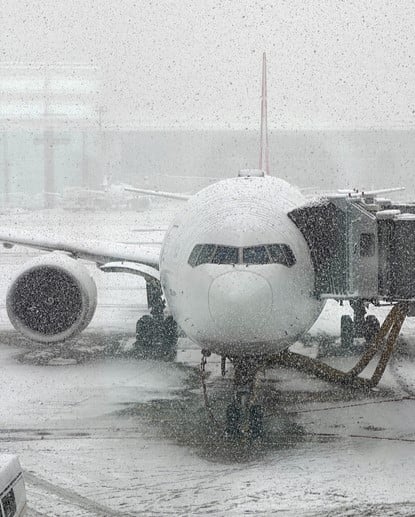
But in cases of extreme weather or other operational problems, airports can ask for permission to extend their operating hours, perhaps to clear a backlog or to allow specific flights to take-off. In such cases, it is necessary to obtain some form of permit. These can be issued quickly but understanding what is needed, who is making the application, and how it must be done is the beginning of a plan.
Other elements of stipulated processes include air traffic management. To be considered a priority and ready to depart means that the passengers must be onboard with doors closed, for example. Deciding to do that obviously then has consequences on what resources might be needed should the weather close in again. It is not unusual for airlines to want to get passengers onboard in the hope, rather than the expectation, of a quick departure.
Staffing
Staffing is a far more complex problem:
These are just the big-ticket items. The fundamentals must also be in place. Food and beverages will be needed so perhaps at least one retail outlet needs to be kept open. And if only a limited area of the airport is open with just one set of bathroom facilities, how can these be kept clean?
There are, moreover, fatigue risk management regulations to filter into the equation. Pilots and crew can only stay on duty for so long. If a flight is delayed, the length of the flight will determine whether that crew can still fly.
Cost
There are, of course, cost considerations in all of this and not just for the airport. If personnel are keeping a retail outlet at the request of the airport, then it must be agreed which party is footing the bill.
It is not just the cost of staff or the allocation of cost with third parties that is an issue either. There is a bigger picture that must be considered. A badly handled disruption can be expensive, not only in terms of compensation but also in terms of reputational loss.
But good planning doesn’t come cheap either. Holding regular workshops and table-top exercises also come with a price tag and how costs are split between the different parties needs to be decided.
“Millions of dollars can be wasted on recovering from disruption when investment in proactive measures like workshops and desktop exercises are less expensive. But again, this requires collaboration because the costs are not the same for every partner. An airline might bear the brunt of costs in a recovery but perhaps it is an airport paying for the workshops and training.” - Velissarios Eleftheriou, IATA External Instructor
Security
Airport security must be maintained no matter the circumstances. The challenge is in ensuring that even as decisions are taken to move passengers or aircraft and to open or close sections of the airport.
It could be, for example, that passengers can be secured but the baggage has to remain on the aircraft overnight. Whatever priorities are established requires close collaboration at all points of the decision-making process.
Effectively managing challenging circumstances necessitates a comprehensive set of skills. Although each scenario presents its own unique characteristics, relevant competencies—ranging from financial planning to ground services and passenger handling—can be developed through targeted training.
Specialized education allows all airports to be maximized and combined so that the whole is greater than the sum of its parts. Consulting experts in each of the dedicated domains offers critical insights ahead of time, enabling airport management to make informed decisions and fostering innovation and improved solutions.
Additionally, the implemented tools must be equipped to manage real-world scenarios, such as an airport impacted by severe weather at 02:00, rather than relying solely on theoretical models.
As Eleftheriou stresses, “The key is to have no surprises. The only way to achieve this is to ensure all necessary stakeholders are included in the consultation process.”
Airports leaders do not always come from within the industry. It is essential, however, that they have a thorough knowledge of operations and the challenges faced by each department. Airport Operations – Advanced gives participants practical knowledge of key airport operations with an emphasis on efficiency and safety. Those that successfully complete the course will have extensive understanding of the needs of airlines, authorities, ground service providers, passengers, and freight forwarders.
| Affected area | courses |
|---|---|
| Operations | |
| Strategy | |
| Communications |


